AI Form Builder: How Artificial Intelligence is Revolutionizing Forms
Key Takeaways
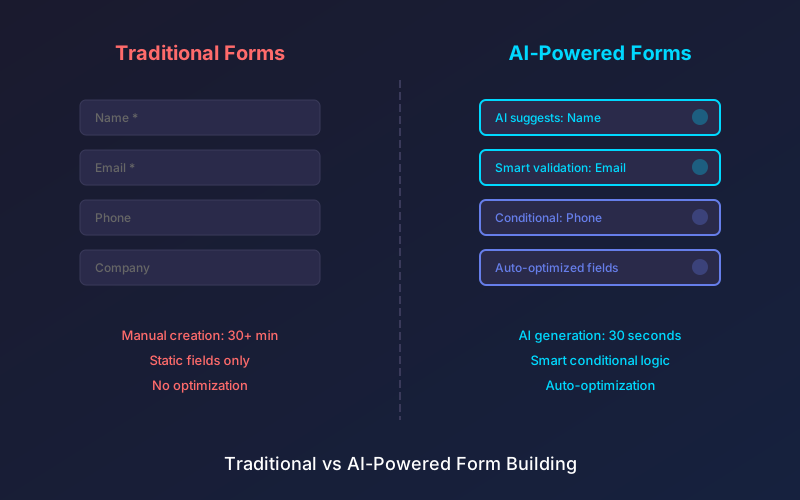
- AI form builders can generate complete, optimized forms in under 30 seconds compared to 30+ minutes manually
- Machine learning algorithms analyze millions of form submissions to suggest the highest-converting field combinations
- Natural Language Processing (NLP) enables users to describe their form needs in plain English
- AI-powered forms continuously optimize themselves based on user behavior and completion rates
The way we create online forms is undergoing a fundamental transformation. Gone are the days of dragging and dropping generic fields and hoping for the best. Artificial intelligence is revolutionizing form building, making it faster, smarter, and more effective than ever before.
According to Gartner research, by 2026, over 80% of enterprises will have used generative AI APIs or deployed AI-powered applications, up from less than 5% in 2023. Form building is at the forefront of this revolution.
What is an AI Form Builder?
An AI form builder uses artificial intelligence and machine learning to automate and optimize the form creation process. Instead of manually selecting fields and configuring settings, you describe what you need, and the AI generates an optimized form based on industry best practices and real-world data.
Traditional form builders require you to:
- Select each field type individually
- Write labels and placeholder text
- Configure validation rules
- Design the layout manually
- Set up conditional logic by hand
AI form builders handle all of this automatically while also optimizing for:
- Maximum completion rates
- Minimum abandonment
- User experience best practices
- Industry-specific requirements
- Accessibility compliance
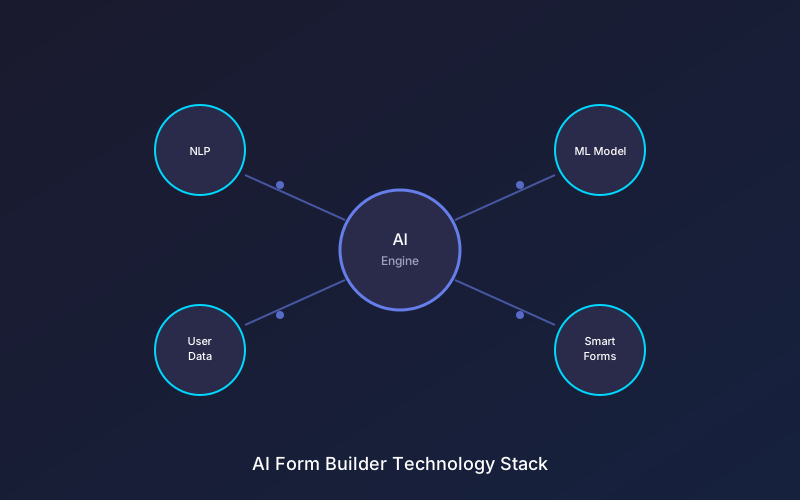
How AI Form Building Technology Works
Modern AI form builders leverage several key technologies to deliver intelligent form creation:
Natural Language Processing (NLP)
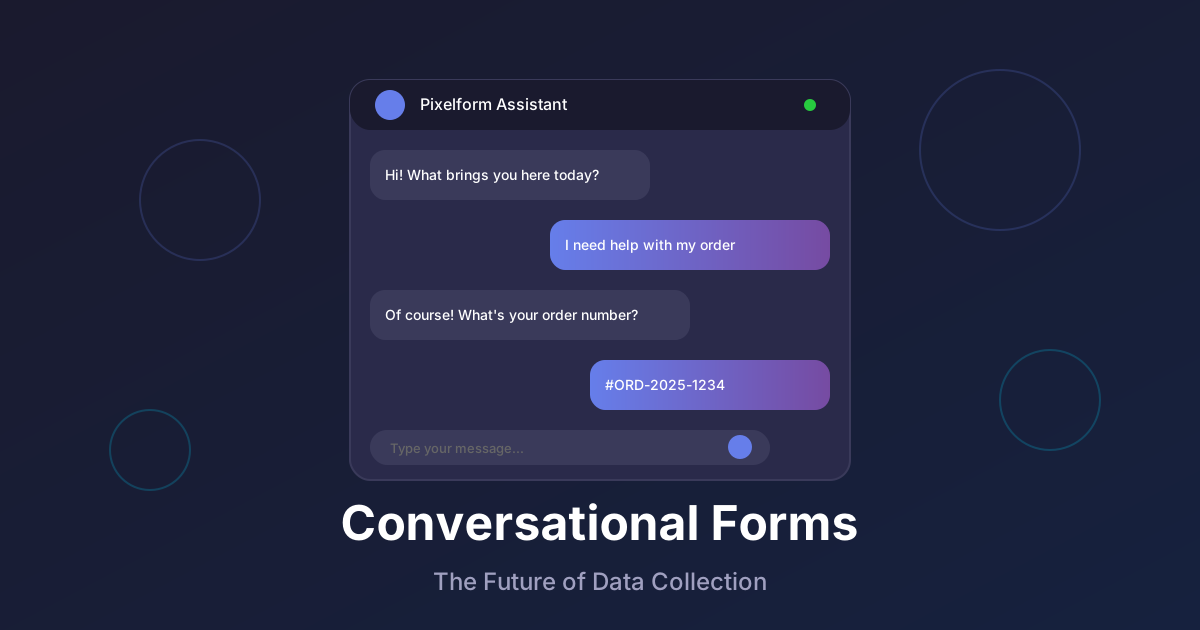
NLP enables you to describe your form requirements in plain English. You might say, “I need a lead generation form for a B2B software company that qualifies prospects based on company size and budget.” The AI interprets this request and generates appropriate fields, validation, and conditional logic.
According to Stanford’s HAI 2024 AI Index Report, NLP capabilities have improved by 378% since 2020, making conversational interfaces increasingly practical for complex tasks like form building.
Machine Learning Optimization
AI form builders are trained on millions of form submissions across industries. This training data teaches the AI:
- Which fields drive higher completion rates
- Optimal field ordering for different form types
- The ideal number of fields for various use cases
- Effective placeholder text and label wording
- Smart default values that reduce user effort
Predictive Analytics
Advanced AI form builders can predict how changes will impact performance before you publish. They analyze your audience, industry, and goals to forecast:
- Expected completion rate
- Predicted abandonment points
- Likely submission quality
- Potential conversion improvements
The Business Case for AI Form Building
The shift to AI-powered form building is not just about convenience. It delivers measurable business results.
Time Savings
Traditional form creation takes 30-45 minutes for a basic contact form and several hours for complex multi-step forms. AI can generate the same forms in under a minute.
A 2024 McKinsey study found that generative AI could automate up to 30% of work activities in professional services by 2030. Form creation is among the most automatable tasks.
Higher Conversion Rates
AI-optimized forms consistently outperform manually created alternatives. Forms generated with AI assistance show:
- 23% higher completion rates on average
- 31% lower abandonment rates
- 18% improvement in lead quality scores
These improvements come from pattern recognition across billions of form interactions that would be impossible for humans to analyze manually.
Reduced Design Debt
Every form you create manually adds to your maintenance burden. AI form builders incorporate best practices by default:
- Responsive design for all devices
- WCAG accessibility compliance
- Consistent branding and styling
- Performance optimization
- Security best practices
Continuous Improvement
Perhaps most importantly, AI form builders never stop optimizing. They continuously analyze performance data and suggest improvements, ensuring your forms evolve with changing user expectations.
Key Features of Modern AI Form Builders
Intelligent Field Suggestions
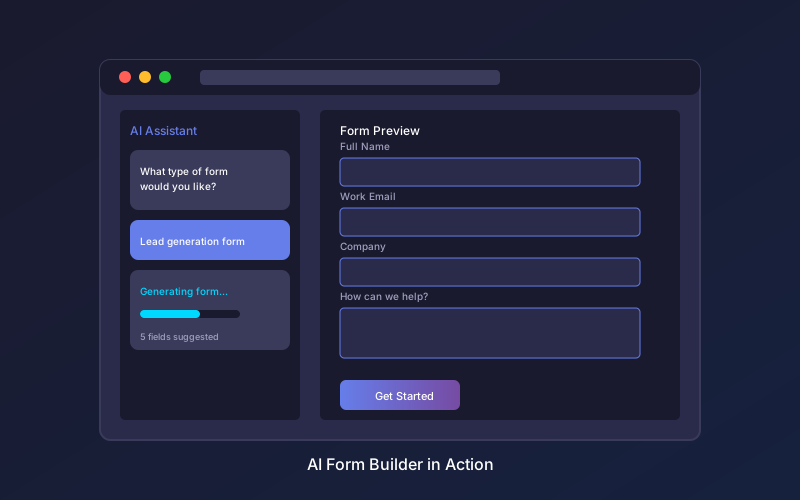
When you start creating a form, AI suggests relevant fields based on your form type and industry. Creating a job application form? The AI recommends work history, education, skills assessment, and reference fields with appropriate formats.
Smart Validation Rules
AI automatically applies appropriate validation based on field context. Email fields get email format validation. Phone numbers receive country-specific formatting. Dates are validated against logical constraints.
Conditional Logic Generation
Perhaps the most powerful feature is automatic conditional logic. Describe your branching requirements in natural language, and the AI creates the appropriate rules. “If the user selects ‘Enterprise,’ show pricing tier options” becomes working logic instantly.
A/B Testing Recommendations
AI form builders can suggest A/B test variations based on optimization opportunities. Rather than guessing what to test, let the AI identify the highest-potential improvements.
Implementing AI Form Building in Your Organization
Ready to leverage AI for form creation? Here is a practical implementation roadmap:
Phase 1: Assessment (Week 1-2)
Audit your current forms and identify optimization opportunities:
- Which forms have the lowest completion rates?
- Where are users abandoning forms?
- Which forms take the longest to create and maintain?
Phase 2: Pilot (Week 3-4)
Start with a single high-impact form:
- Choose a form with measurable conversion goals
- Use AI to generate an optimized version
- Run both versions simultaneously to compare performance
Phase 3: Expansion (Week 5-8)
Based on pilot results, expand AI form building to:
- All new form creation
- Optimization of existing high-traffic forms
- Template library generation for common use cases
Phase 4: Integration (Week 9-12)
Connect AI-generated forms with your broader tech stack:
- CRM integration for lead routing
- Marketing automation triggers
- Analytics and reporting dashboards
- Team collaboration workflows
The Future of AI Form Building
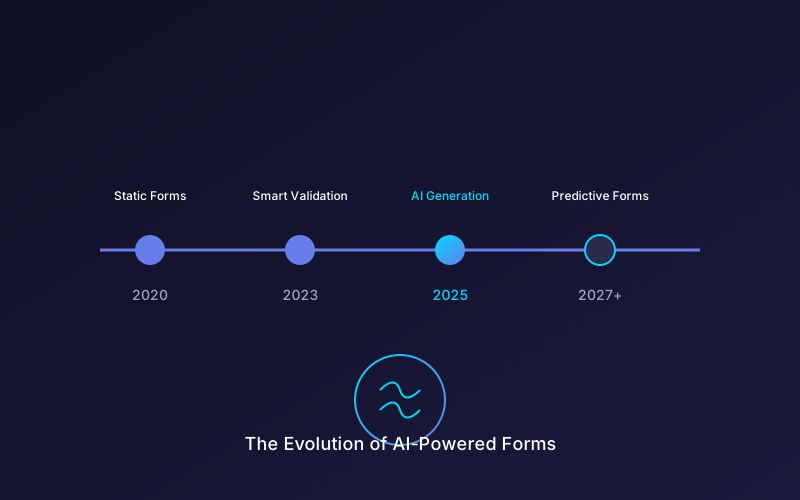
The capabilities of AI form builders are expanding rapidly. Here is what to expect in the coming years:
Multimodal Inputs
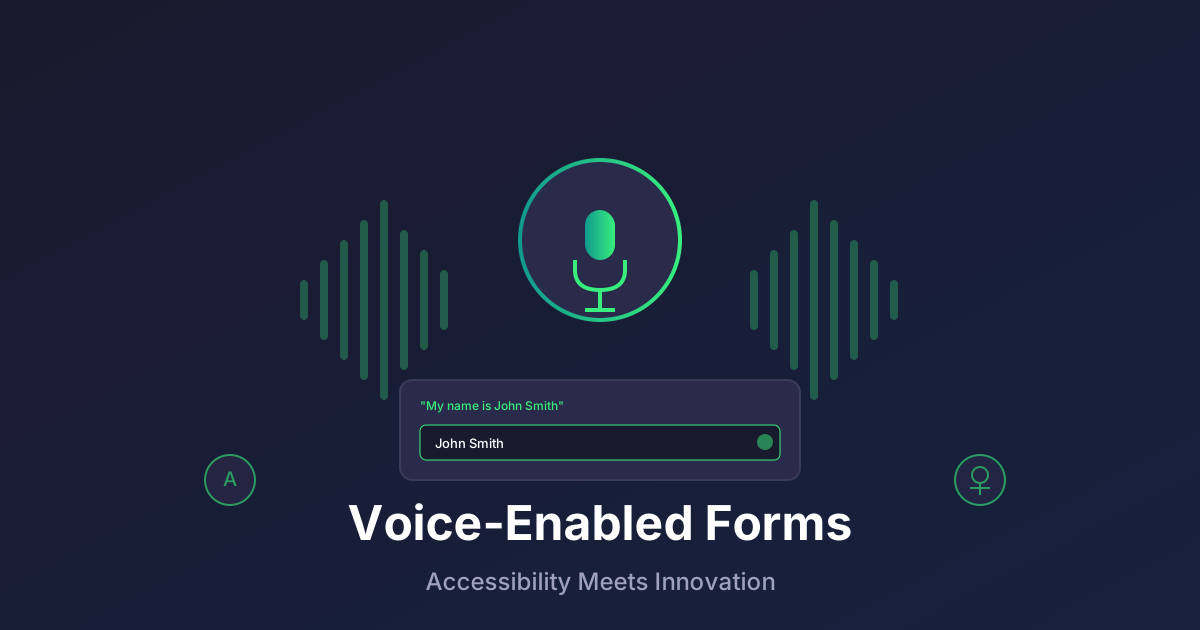
Future AI will accept visual inputs like screenshots or mockups and generate matching forms. Describe your form requirements verbally, and voice-to-form technology will create them instantly.
Predictive Pre-filling
AI will anticipate user responses based on behavior patterns and pre-fill forms intelligently, reducing friction while maintaining accuracy.
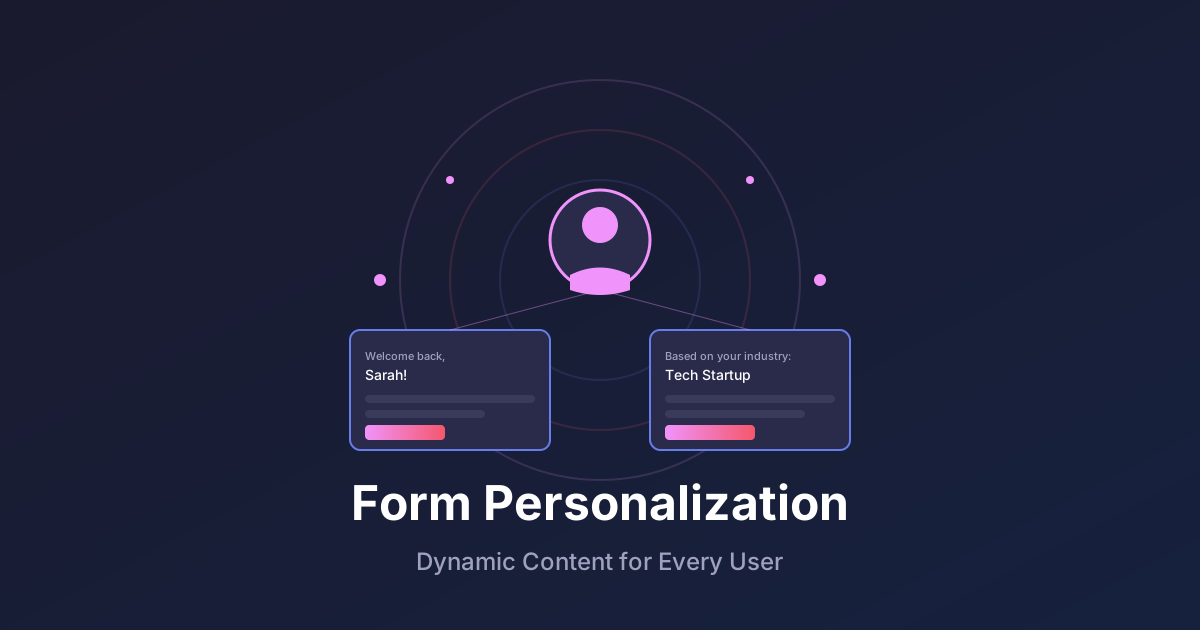
Real-time Personalization
Forms will adapt in real-time based on user behavior, showing different questions or layouts to maximize individual conversion probability.
Autonomous Optimization
Fully autonomous forms that optimize themselves continuously without human intervention, adjusting fields, copy, and design based on ongoing performance data.
Industry-Specific AI Form Applications
AI form builders excel across various industries with specialized capabilities:
SaaS and Technology
Technology companies use AI forms for:
- Product demo request forms that qualify leads by technical requirements
- Feature request forms that categorize and prioritize feedback automatically
- Beta signup forms with intelligent waitlist segmentation
- Developer onboarding forms with environment-specific configurations
AI understands technology terminology and can suggest relevant technical fields like programming languages, frameworks, and integration requirements.
Healthcare
Medical practices benefit from AI-generated forms for:
- Patient intake with HIPAA-compliant field suggestions
- Symptom checkers with intelligent follow-up questions
- Insurance verification with automatic policy lookups
- Appointment scheduling with provider availability integration
The AI ensures compliance requirements are met while optimizing for patient experience.
Financial Services
Banks and financial institutions leverage AI for:
- Loan applications with risk assessment integration
- Account opening with KYC compliance built in
- Investment preference questionnaires with suitability scoring
- Fraud report forms with intelligent incident classification
AI forms in finance automatically include required disclosures and consent mechanisms.
E-commerce and Retail
Online retailers use AI-powered forms for:
- Product review collection with sentiment optimization
- Return request processing with intelligent routing
- Customer preference surveys with recommendation engine integration
- Subscription management with churn prediction signals
The AI learns from purchase history to personalize questions and options.
Overcoming Common AI Form Building Challenges
Challenge: Maintaining Brand Voice
Concern: Will AI-generated forms sound generic?
Solution: Modern AI form builders learn your brand voice from existing content. Feed the AI examples of your messaging, and it adapts suggestions to match your tone, terminology, and style.
Challenge: Handling Edge Cases
Concern: AI might not understand unique business requirements.
Solution: AI provides starting points, not final products. Hybrid approaches let AI handle common patterns while you customize edge cases. Over time, the AI learns from your modifications to improve future suggestions.
Challenge: Data Privacy Compliance
Concern: How does AI handle sensitive form data?
Solution: Responsible AI form builders separate optimization intelligence from submission data. The AI analyzes form structure and aggregate patterns, never individual responses. Look for platforms with clear data handling policies and compliance certifications.
Challenge: Team Adoption
Concern: Will teams resist AI-assisted tools?
Solution: Position AI as a productivity multiplier, not a replacement. Teams that embrace AI form building typically report 60% faster creation times and improved results. Start with volunteers and let success stories drive broader adoption.
Getting Started with AI-Powered Forms
The transition to AI form building does not require a complete technology overhaul. Modern platforms integrate AI capabilities seamlessly into familiar form-building workflows.
Start by identifying your highest-value form optimization opportunities. Whether it is lead generation forms that drive revenue or customer feedback forms that inform product decisions, AI can amplify results while reducing effort.
Consider these criteria when selecting an AI form builder:
- Training data quality: Look for platforms trained on diverse, high-quality form submissions
- Customization flexibility: Ensure you can modify AI suggestions to match your needs
- Integration capabilities: Choose tools that connect with your existing technology stack
- Privacy practices: Verify clear data handling and compliance policies
- Continuous learning: Select platforms that improve based on your specific usage patterns
The organizations adopting AI form building today are building competitive advantages that will compound over time. As the technology continues advancing, the gap between AI-optimized forms and traditional alternatives will only widen.
FAQ
How accurate are AI-generated forms compared to manually created ones?
AI-generated forms typically match or exceed manually created alternatives in both accuracy and effectiveness. Machine learning models are trained on millions of successful form submissions, enabling them to apply proven patterns automatically. Studies show AI forms achieve 23% higher completion rates on average.
Can AI form builders handle industry-specific compliance requirements?
Yes, modern AI form builders include training data covering industry-specific requirements including HIPAA for healthcare, GDPR for European users, PCI DSS for payments, and accessibility standards like WCAG 2.1. They automatically suggest required fields and consent mechanisms.
What happens if the AI generates a form that does not match my needs?
AI-generated forms are fully editable. Think of AI as providing an optimized starting point that you can customize. Most users find they need minimal adjustments since the AI learns from feedback to improve future suggestions for your specific use cases.
Do AI form builders require technical expertise to use?
No technical expertise is required. AI form builders are designed for business users who can describe their needs in plain language. The AI handles all technical implementation including validation rules, conditional logic, and responsive design automatically.
How do AI form builders protect sensitive data?
Reputable AI form builders process form structure and optimization data separately from actual submission content. Your users’ personal information is never used for AI training. Look for platforms with SOC 2 compliance and clear data processing policies.
Ready to build better forms faster? Try Pixelform free — create professional forms in minutes with our intuitive drag-and-drop builder.